

Skip to content
AdDeck
Print Formats/Innovation formats

Print formats

Innovation formats

Shaped and special placements that break the rectangular grid to grab attention on the page.

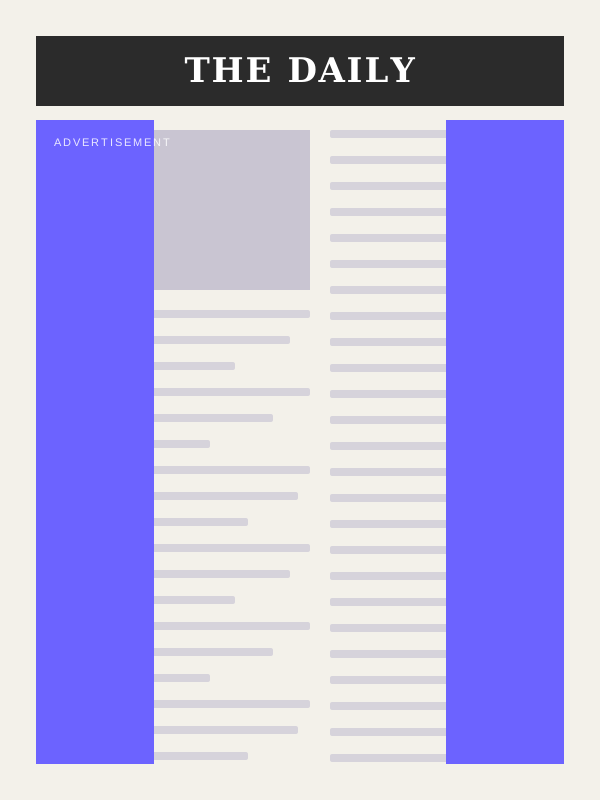
Fireplace (Frame) Ad: page with the adFireplace (Frame) Ad: page without the adWithout adWith ad

↔ Drag the handle to reveal the ad in place

Fireplace (Frame) Ad

An ad that frames the page around the news.

A fireplace ad — also called a frame or wrap-around — surrounds editorial on three or four sides, typically a banner across the top and columns down both sides of a newspaper front page. The reader's eye can't avoid it, yet the news still shows through the 'window' in the middle.

How it works: Sold as a single coordinated placement occupying the page margins. The name mirrors the digital 'fireplace' unit — a leaderboard plus two skyscrapers framing a page — showing how print and digital borrow from each other.

Where it's used:Newspaper front pagesHigh-impact daily takeoversEvent-tied campaigns
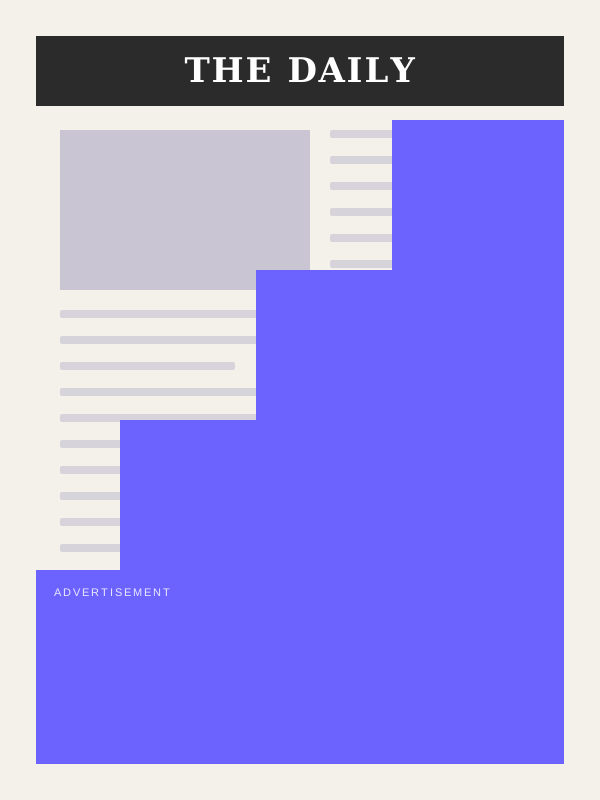
Step-Down (Staircase) Ad: page with the adStep-Down (Staircase) Ad: page without the adWithout adWith ad

↔ Drag the handle to reveal the ad in place

Step-Down (Staircase) Ad

An ad that descends the page in steps.

A step-down, or staircase, ad is shaped like a flight of stairs descending diagonally across a newspaper page, with editorial filling the remaining corners. The unusual silhouette breaks the page's grid and pulls the eye down the page.

How it works: The ad occupies a stepped block of column-inches rather than a clean rectangle, arranged with the publisher's layout team. It's an 'island' placement surrounded on two sides by editorial.

Where it's used:NewspapersRetail and classified-heavy sectionsStandout single placements

Advertorial

Paid content styled like editorial.

An advertorial is a print ad designed to read like an article — matching the publication's typography and tone, but paid for by an advertiser and clearly labelled as advertising. It's the direct ancestor of today's digital native ads.

How it works: Written and laid out to mirror editorial style, carrying a required label such as 'Advertisement' or 'Advertisement feature' (mandated by codes like the ASA's in the UK).

Where it's used:Magazines and weekend supplementsTrade pressSponsored special reports

The print forebear of digital native advertising.

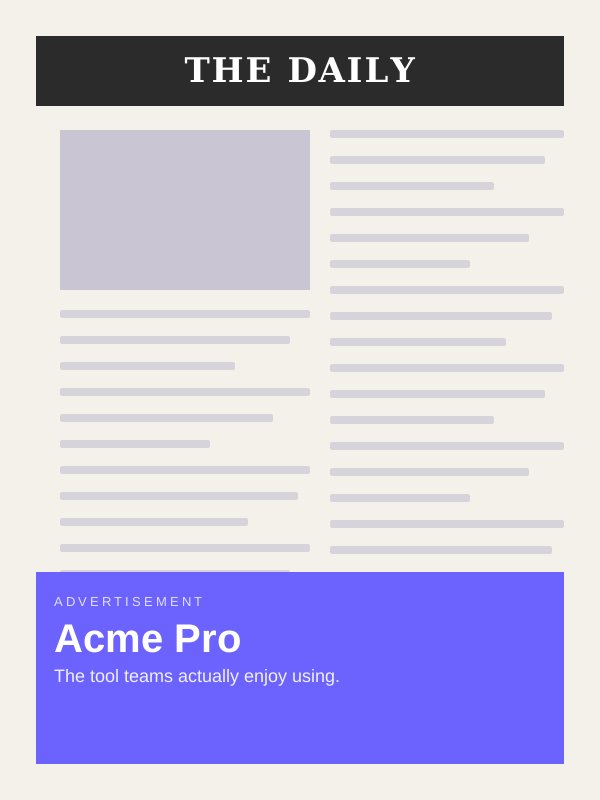
Front-Page Billboard: page with the adFront-Page Billboard: page without the adWithout adWith ad

↔ Drag the handle to reveal the ad in place

Front-Page Billboard

A dominant ad block on page one.

A front-page billboard — also sold as a 'solus' — is a large advertising block on the front page of a newspaper, usually a strip across the foot of the page or a substantial box. It shares the most-seen real estate in the title with the day's main news.

How it works: Sold as a fixed position on page one, most often the bottom strip. Because the front page is the first thing every reader sees, it commands the highest display rates in the paper.

Where it's used:Newspaper front pagesHigh-reach brand campaignsLaunch and event days
Earpiece: page with the adEarpiece: page without the adWithout adWith ad

↔ Drag the handle to reveal the ad in place

Earpiece

Small ads either side of the masthead.

Earpieces (or 'ears') are the small advertising boxes that sit on either side of a newspaper's masthead — the title at the very top of the front page. Compact but premium, they ride alongside the most recognised part of the paper.

How it works: Two small fixed slots flank the masthead, sold individually or as a pair. Their position next to the title gives a brand outsized prominence for such a small footprint.

Where it's used:Newspaper front pagesBrand remindersRepeated daily presence
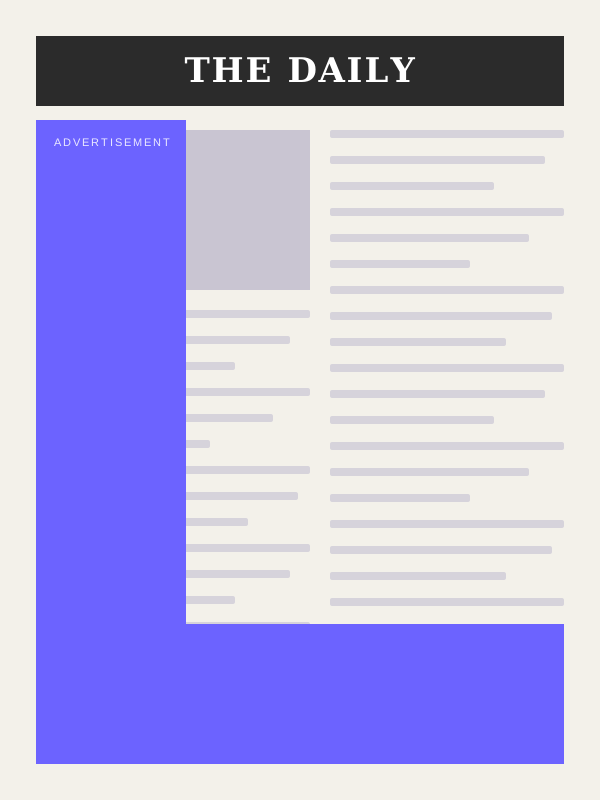
L-Shape: page with the adL-Shape: page without the adWithout adWith ad

↔ Drag the handle to reveal the ad in place

L-Shape

An ad that wraps an L around the news.

An L-shape ad runs down one side of the page and along the bottom, forming an L around the editorial in the corner. The wrap-around silhouette frames the content and is hard for the eye to skip.

How it works: Sold as a single shaped placement occupying two edges of the page, with editorial filling the remaining corner. It's part of a family of 'shaped' newspaper ads that deliberately break the rectangular grid.

Where it's used:NewspapersHigh-impact single placementsRetail and FMCG
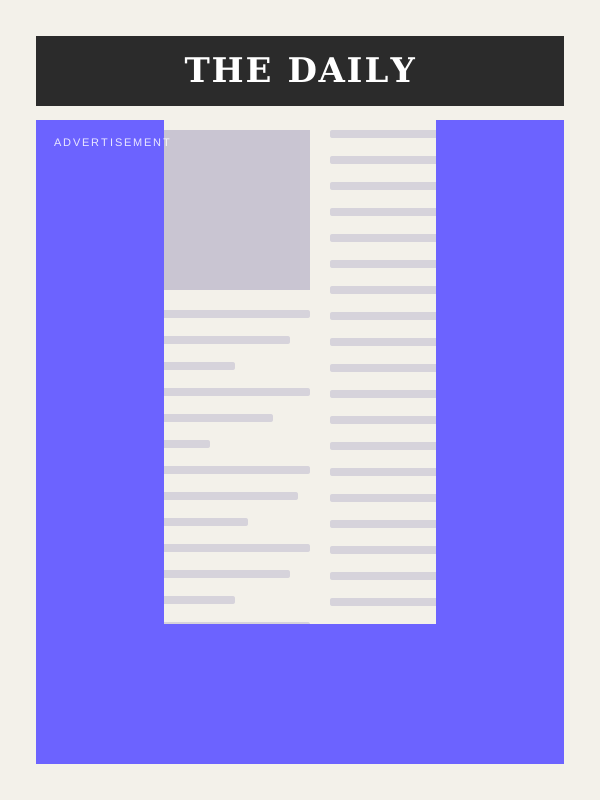
U-Shape: page with the adU-Shape: page without the adWithout adWith ad

↔ Drag the handle to reveal the ad in place

U-Shape

An ad framing three sides of the page.

A U-shape ad runs down both sides of the page and along the bottom, cradling the editorial in a U. It surrounds the content on three sides for near-unavoidable visibility while leaving the top for the news.

How it works: A single shaped placement occupying the left, right and bottom margins. It's a close cousin of the fireplace (which also caps the top) and the L-shape.

Where it's used:NewspapersFront and feature pagesTakeover-style campaigns
Tetris: page with the adTetris: page without the adWithout adWith ad

↔ Drag the handle to reveal the ad in place

Tetris

Interlocking ad blocks slotted around the news.

A Tetris ad is built from interlocking blocks that slot around the editorial like the puzzle game, creating an irregular, eye-catching footprint instead of a clean rectangle.

How it works: Several connected ad units are arranged to interlock with the page's editorial blocks. The unusual shape draws the eye and signals a premium, creative buy.

Where it's used:NewspapersStandout creative campaignsFeature sections
Bookends: page with the adBookends: page without the adWithout adWith ad

↔ Drag the handle to reveal the ad in place

Bookends

Matching ads down both edges of a spread.

Bookends place matching ads down the left and right edges of a page or spread, holding the editorial between them like books on a shelf. The symmetry frames the content and lands the message twice.

How it works: Two vertical placements on opposing margins, usually sold as a pair and designed to mirror or complement each other across the spread.

Where it's used:NewspapersDouble page spreadsCampaigns wanting symmetry
Chequerboard: page with the adChequerboard: page without the adWithout adWith ad

↔ Drag the handle to reveal the ad in place

Chequerboard

Ads and editorial in an alternating grid.

A chequerboard alternates advertising and editorial blocks across the page in a checkerboard pattern, weaving ads through the content rather than confining them to one corner.

How it works: Multiple small ad units are placed in a grid, interleaved with editorial cells. The repetition keeps a brand in view as the reader's eye moves across the page.

Where it's used:NewspapersClassified and listings pagesMulti-product or retail campaigns