
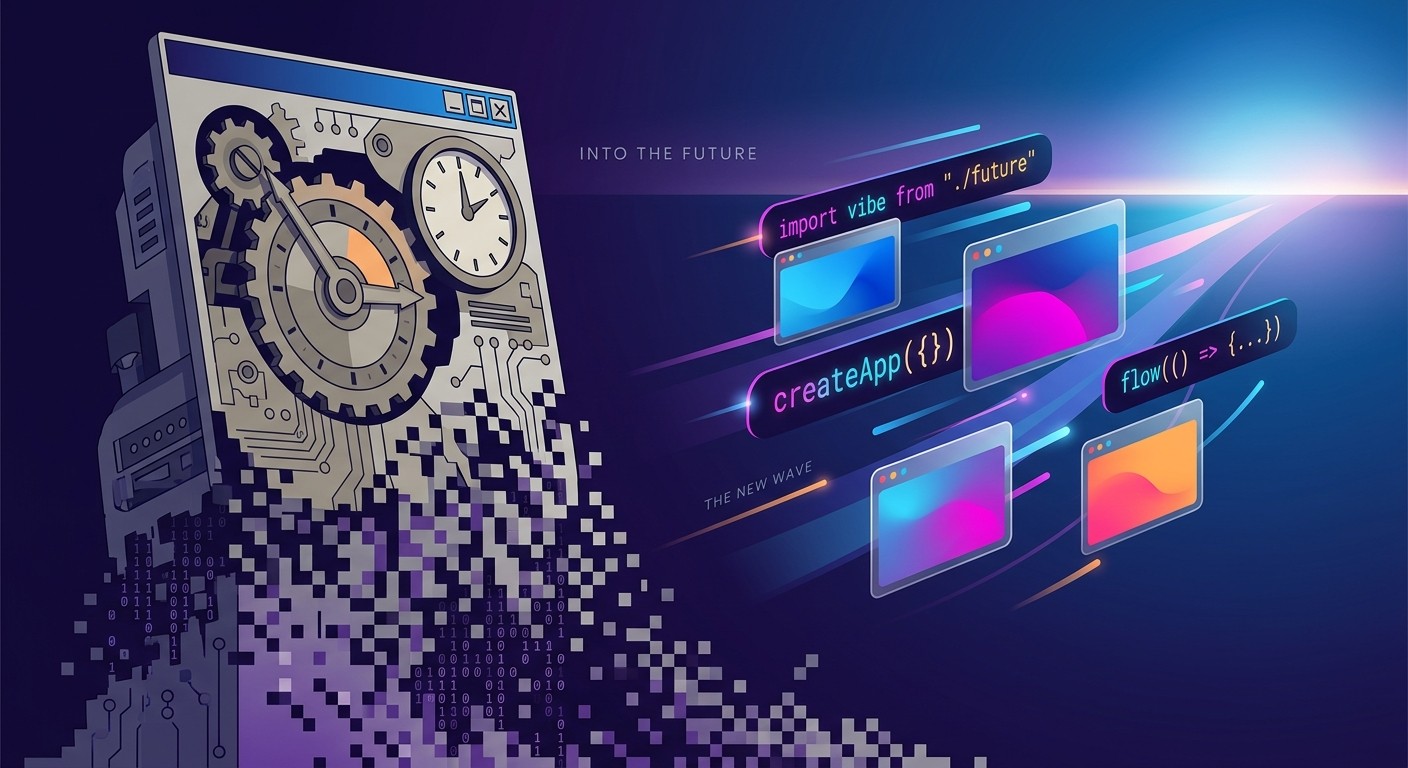
I wanted to go slightly off topic with this one and talk about Adobe. Everyone seems to be losing their minds over Adobe and its latest rivals: a suite of vibe-coded apps built largely by developer Brandon Thomas.
Now, Brandon Thomas has a track record. He isn't some guy alone in his bedroom, 'sticking it to the man'. He's a 15-year industry veteran who previously ran the AI start-up Storyteller.ai, and he has cast Sauron's eye squarely at Adobe and Microsoft, with hints that Autodesk could be next. Let's just say, essentially, the applications most people use on a daily basis.
Why I care
Why am I interested? Well, I've been using Photoshop and other assorted Adobe software since the late '90s. I started using Photoshop CS1 professionally, along with InDesign, in 2003, after the company I was with ditched QuarkXPress and CorelDRAW.
Fast-forward twenty-odd years and Adobe has cornered the market. The classic case of 'if you can't beat them, join them'? No, not in Adobe's case. It was more like 'if you can't beat them, buy them and kill them off'. Just ask anyone who loved FreeHand, which Adobe picked up when it bought Macromedia in 2005 and stopped developing two years later. It tried something similar with Figma in 2022, until UK and EU regulators stood in the way of the $20 billion deal.
I mean, if you're an Adobe shareholder, it's been a great run. Adobe has just reported record quarterly revenue of $6.76 billion and expects around $26.6 billion for the full year.
Of course, the advertising world is built largely on the backbone of Adobe. From a creative perspective, almost everything you see in print and online, from billboards to a tiny classified advert in the back of your newspaper, is most likely designed and output from one of the myriad Adobe products.
I'm interested to see what Adobe does, if anything. I've worked at some very large media corporations, and from experience, updating or transitioning a piece of software, even by a minor version, can take several months. Swapping or changing workflows, even when there's a cost saving? You're talking years. Even now, the company I work for is on a version of Adobe almost four years old.
Jumping ship
I was paying an extortionate amount for an Adobe Creative Suite licence for years. I had some freelance work, then on the recommendation of a friend I switched to the Serif Affinity suite. I must admit it took some getting used to, but it's actually very powerful and fully featured. About a month after I switched, Affinity was acquired by Canva.
I'll be honest: whenever I'm sent files by 'professional' graphic designers and see they're from Canva, I do turn into one of those production snobs. Everything must be wrong: wrong colour space, wrong size…
…Well, not always. Don't get me wrong, some of the things I've seen produced in Canva could make a saint swear. But in the right hands, it can produce some great results. Since the acquisition, Canva has unified the Affinity apps into one free app, with a dashboard of sorts where you switch between specialities: vector, pixel and layout. Personally, I quite like having separate apps that each specialise in one area.
Enter the 'Craft' suite
Step in PhotoCraft, LightCraft, FilmCraft, VectorCraft, DesignCraft, EffectCraft and PDFCraft: a suite of open-source creative tools, collectively called ArtCraft, that replicate the Adobe applications for free. The source code is on GitHub and, from what I've read, they've been vibe-coded in Rust with Anthropic's Claude. I'm not sure whether that last part is a good or a bad thing, but it seems to have rustled a few feathers and has made it into the headlines.
One caveat worth knowing: they're all still in alpha, so they're not quite ready to replace your day-to-day kit just yet.
Not only that, but Brandon Thomas has now announced apps to replace Microsoft Office's Excel, PowerPoint and Word, named GridCraft, DeckCraft and WordCraft respectively, which were also created with Claude.
It's an interesting development in the world of software, design and advertising. I think we're just scratching the surface of what can be achieved with a little bit of know-how and ingenuity, coupled with AI coding.
Should Adobe be worried?
I dare say none of this comes as a surprise. Artificial intelligence has been transforming advertising workflows and content, and optimising ad spend across digital channels, for a while now. I know Adobe has tried to jump on the bandwagon, with mixed results. Intrusive in-app pop-ups recommending its AI features haven't really gone down well with the user base.
I think, long term, Adobe should be worried. This AI revolution will no doubt hurt its bottom line, but it could still leverage its position. For a start, work on the bugs, listen to the features people want and don't get me started on its cancellation policy! I think the regulators have said enough on that already: in March 2026, Adobe agreed a $150 million settlement with the US government over hidden early termination fees and subscriptions that were hard to cancel.
Well, I'd be interested in finding out what you think. Cast your vote in the poll below.
Poll
What happens to Adobe now?
Votes are anonymous. Pick one to see the results.
Sources and further reading
- Gizmodo: Someone vibe coded a free knockoff of Adobe Creative Suite (October 2026).
- Decrypt: Developer who cloned Photoshop with AI just did the same to Microsoft Office.
- Al Jazeera: How AI apps are offering free substitutes for Big Tech software (October 2026).
- Adobe: Q3 fiscal 2026 results (SEC filing, September 2026).
- Figma: Figma and Adobe are abandoning our proposed merger (December 2023).
- FOX 29: Adobe settlement includes $75M in 'free services' for some users (March 2026).