
The topic of conversation in the office the other day was pause ads on TV. Ironically, it wasn't the usual moan about adverts being forced on us. Traditional commercials, or ad breaks, have always had one job: to break the flow, divert your attention and get a message in front of you, whether you wanted it or not.
For years, that has felt intrusive, and advertisers have always been fighting the friction. Ad breaks you can't skip. Adverts that dare you to mute the sound or look away, only for playback to stop until you re-engage. We've all been there.
Fast-forward, well… not that many years, let's be honest. Now you pause a programme to answer the door, make a cup of tea or check your phone, and there it is: an advert sitting on your television. It barely warrants a second thought.
I get it. Pause ads, overlays or whatever you want to call them do seem to hit a sweet spot for advertisers. How can we, as consumers, complain? We're the ones triggering them in the first place, usually because we need to step away for a minute.
Our water-cooler conversation did get me thinking, though. When did we become so used to advertising in the moments when we're not even watching?
It also brought to mind the old saying, time is money. Usually attributed to Benjamin Franklin, it's an idea that has underpinned business for centuries. But perhaps there's a more literal interpretation emerging in the world of streaming. If every second of our attention has a commercial value, what happens when we stop paying attention altogether?
As it turns out, quite a lot. Streaming platforms have found another way to make money from our viewing habits, and the pause button is becoming valuable advertising space in its own right.
From the ad break to the pause screen
For decades, television advertising followed a fairly predictable pattern. A programme stopped, the adverts started, and viewers either watched or used the break to catch up on whatever was happening elsewhere in the house.
Streaming changed that relationship. We got used to choosing what we watched, when we watched it and, on many platforms, whether we wanted to pay for an ad-free experience.
But streaming services still need to make money. Competition for subscribers is intensifying, and there's the cost of original programming to consider. Commissioning new content is a huge financial gamble, with some productions costing hundreds of millions of pounds or dollars, and not every investment pays off.
This is an industry that's always looking for the next revenue stream, so it was only a matter of time before platforms looked more closely at advertising. More of them have introduced cheaper, ad-supported subscriptions, trying to balance the viewing experience, avoid losing customers and stop it feeling as though you're watching one long advert.
The answer? Enter the pause ad.
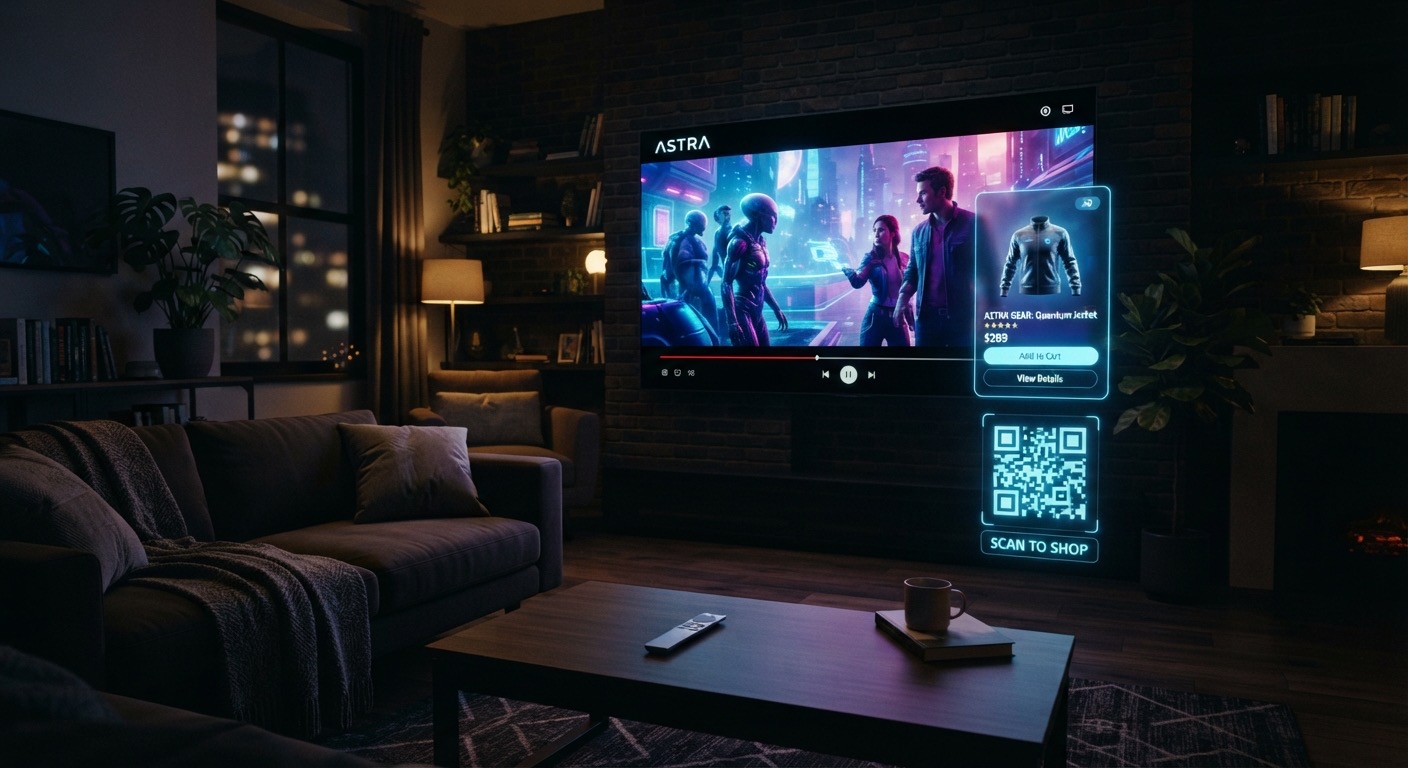
The concept is simple. You stop playback and an advert appears on screen, often alongside the paused content. Rather than interrupting a scene or forcing you through a commercial, the platform uses a moment you've chosen to create an advertising opportunity.
Amazon Prime Video, Hulu and other streaming and connected-TV platforms have helped bring the format into the mainstream, and the appeal for advertisers is obvious. The ad doesn't have to compete with the next scene, another commercial or the temptation to skip ahead. It has the screen to itself while the viewer has chosen to stop watching.
Of course, that doesn't automatically mean the viewer is paying attention. But advertising is a game of opportunity, and pause ads give brands another way to reach an audience. I'm not sounding the death knell for the traditional ad break any time soon, but I can see spend being diverted away from some traditional formats over the coming years.
The value of doing nothing
PAY ATTENTION! Were you?
Speak to a creative in the advertising industry and they'll tell you it's about communication, conveying a message, an art form. Speak to one of the 'numbers guys' and they'll tell you it's all about attention. But much of the industry has traditionally bought that attention in blocks of time and space: a 30-second television spot, a page in a magazine or a banner on a website.
Pause ads challenge that thinking. Instead of buying time within a programme, advertisers can buy visibility during a break in it.
There's a subtle but important distinction here. A conventional TV ad asks you to watch something you didn't choose to watch. A pause ad appears because you chose to stop watching something else.
That doesn't necessarily make it welcome, but it can make it feel less disruptive. The viewer decides when playback stops, while the platform gets a chance to show a message without interrupting the programme itself.
For advertisers, a static or lightly animated creative can also stay on screen for longer than a conventional video spot. Someone might glance at it for a second, or leave it there while they deal with something else. Either way, it's a different route to getting a brand in front of an audience.
Commercially, why wouldn't companies explore it? They're making money from a moment that previously earned nothing, and we're not talking small change.
Netflix reported more than $1.5 billion in advertising revenue in 2025, more than two and a half times the previous year, and expects that figure to roughly double again in 2026. That isn't revenue from pause ads specifically, but it shows just how seriously streaming platforms are taking advertising as a business in its own right.
When the sums get that big, it's hardly surprising platforms are looking at every opportunity going.
Shoppable ads
I'm showing my age here, but I remember Ceefax. The US had its own short-lived teletext experiments in the early 1980s, though they never really caught on. Looking back, those early attempts to make television more interactive feel like a distant relative of what we're seeing now.
Traditionally, television was something you watched rather than something you interacted with. So I'm watching with interest as advertisers explore how engaging interactive, shoppable pause ads and overlays could become. Imagine being able to shop, play a game or take part in a quick quiz at precisely the moment you've probably got a few seconds to spare.
Some of this is already happening in various forms, but I expect the pace to pick up.
This is where smartphones come in.
A pause ad can display a QR code that takes viewers to a product page, a promotion or a retailer's website. Instead of trying to remember a brand name or hunting for a product later, viewers can move from the big screen to their phone in seconds.
The pause itself provides a useful window for that. Unlike a QR code flashed briefly during a video advert, one on a pause screen stays there for as long as the viewer leaves it.
That opens up some interesting possibilities. A retailer could promote a particular product and link straight to its online shop. A film or TV campaign could point viewers towards a trailer, competition or exclusive content. A food brand could connect an advert to a recipe or a shopping list.
It goes beyond QR codes, too. Depending on the platform, interactive formats can include selectable options, product carousels and other ways to engage with an advert.
The bigger idea is that the television screen no longer has to be the end of the advertising journey. It can be the start of one.
And this is where things get particularly interesting. We could find ourselves living out one of those scenes from Minority Report, where advertising follows us from one screen to the next. A growing web of data points could give advertisers an increasingly joined-up picture of our lives, connecting what we watch with what we browse, search for and buy.
It's an exciting prospect commercially, but it also raises some fairly obvious questions about privacy, tracking and just how much of our lives we want to turn into advertising opportunities.
A real-world example
This isn't just a theoretical opportunity. In a case study published by Amazon Ads, Sanpellegrino used Prime Video pause ads as part of the US launch of its CIAO! drink in 2025.
Amazon reported a return on ad spend (ROAS) of $4.11 for the Prime Video pause-ad placement, alongside an add-to-basket rate 150% above benchmark.
Those are encouraging results, but it's worth keeping the context in mind. These figures come from the platform selling the advertising, not independent research, and one campaign's results won't necessarily translate to other brands or products.
Still, it's a useful illustration of where the format could be heading. An advert that might once have done little more than build awareness can now be part of a wider journey towards a purchase.
A captive audience, or just an audience that has pressed pause?
There's a fine line between making advertising less intrusive and making it impossible to ignore.
The appeal of pause ads is that they don't interrupt playback. But that doesn't mean every viewer will appreciate seeing an advert when they stop a programme.
Think about why people pause in the first place. They might want to read a line of dialogue, study a detail in a scene or simply take a break. An advert that covers too much of the picture could be particularly irritating in those moments.
There's also the risk of repetition. If the same brand appears every time someone pauses during a weekend binge-watch, the novelty will wear off fast.
Streaming services will need to strike a balance between generating revenue and keeping a viewing experience people actually want to come back to. Frequency caps, sensible creative placement and leaving viewers room to see what they've paused will all matter.
But will they? If history is anything to go by, it's hard to say. Just look at the rise of ad blockers, driven in part by the sheer volume and intrusiveness of online advertising. When advertising becomes too much of a nuisance, people find a way around it.
Pause ads might feel like a more considerate approach today, but that could change quickly if platforms get too aggressive. There's a difference between making use of a moment when someone isn't watching and assuming every spare second is fair game.
The pause button is just the beginning
Pause advertising is part of a wider shift in how streaming platforms think about the space around their content.
As viewers move between subscription tiers, on-demand programmes and ad-supported services, platforms have more reasons to experiment with where advertising appears and how it works. The aim isn't simply to squeeze more adverts into a viewing session. It's to find ways to make money without pushing viewers away.
That makes pause ads an interesting development, even if they never become the dominant format some predict.
Their real potential lies in the combination of visibility and interaction. A well-placed advert can put a brand in front of a viewer when playback has stopped, while a QR code or other interactive feature gives that viewer a simple next step.
Whether people welcome that, ignore it or eventually tire of it will decide how far the format goes.
Which brings me back to that conversation at work. Perhaps the most telling thing about pause ads isn't the technology, or even the revenue. It's how quickly something new becomes part of the furniture.
We used to think of pressing pause as a way to step away from the television for a moment. Now, that moment can come with a price tag.
Benjamin Franklin's old saying was never really about television, of course. But when streaming platforms are finding commercial value in the seconds between scenes, time is money feels less like an aphorism and more like a business model.
Even when we're not watching, someone is still trying to sell us something.
Sources and further reading
On AdDeck:
- Trending and emerging ad formats: quick guides to CTV, pause ads, shoppable ads and more.
- Ad glossary: plain-English definitions of ROAS, CTV, frequency and other terms used here.
Elsewhere:
- Netflix: Q4 2025 shareholder letter. Background on the growth of Netflix's advertising business.
- Google Display & Video 360: Pause ads documentation. An overview of pause ads as a connected-TV format.
- Amazon Ads: Sanpellegrino CIAO! campaign case study. Campaign results for Prime Video pause ads.